Evidence-Based Literature Reviews
Evidence-based literature reviews for patients with unresolved, complex, or previously attributed-to-functional symptom patterns.
Clinical workflow visuals
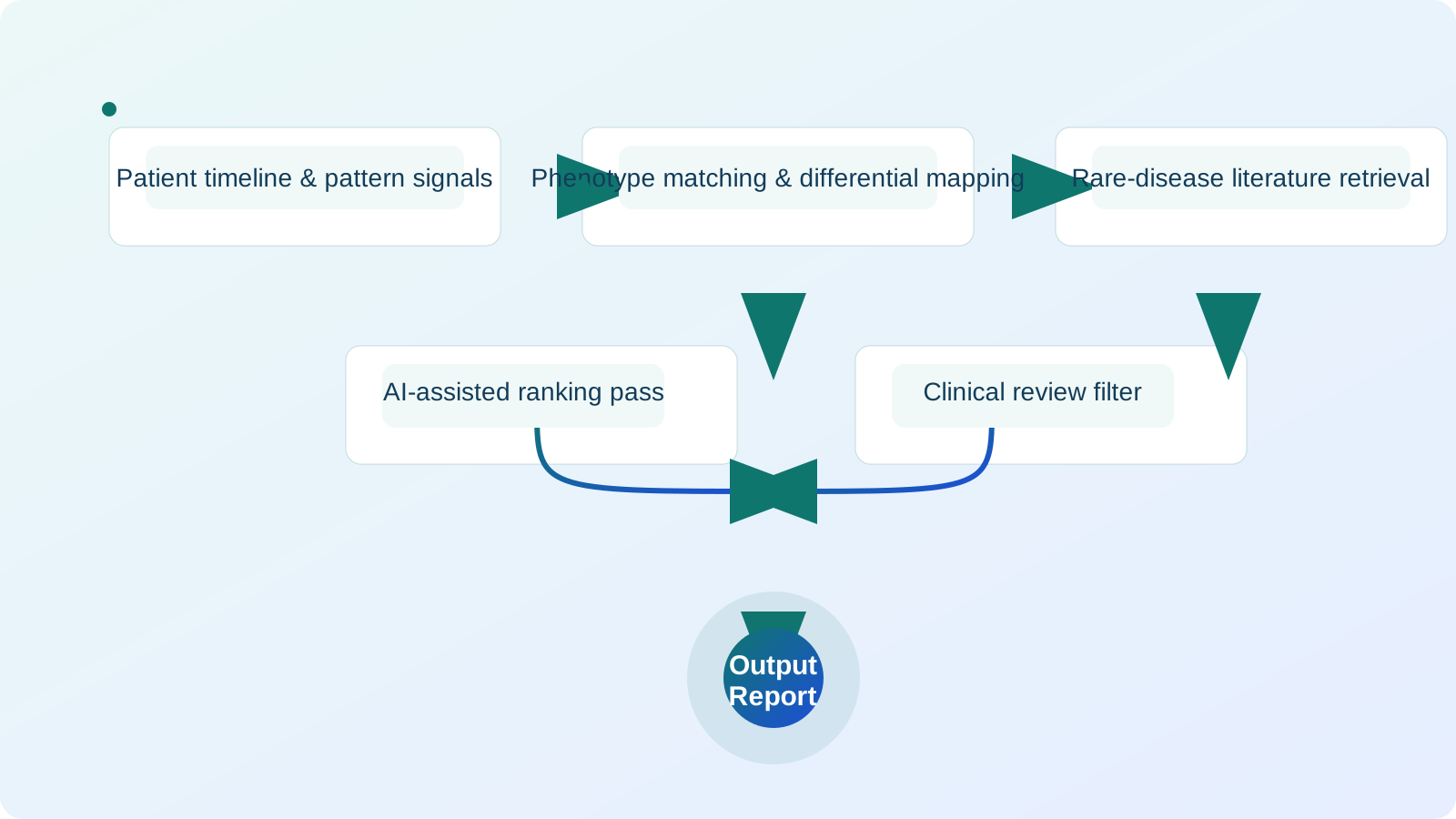
Clinical signal-to-hypothesis flow
A compact workflow from symptom clusters through differential branches to high-yield literature matches.
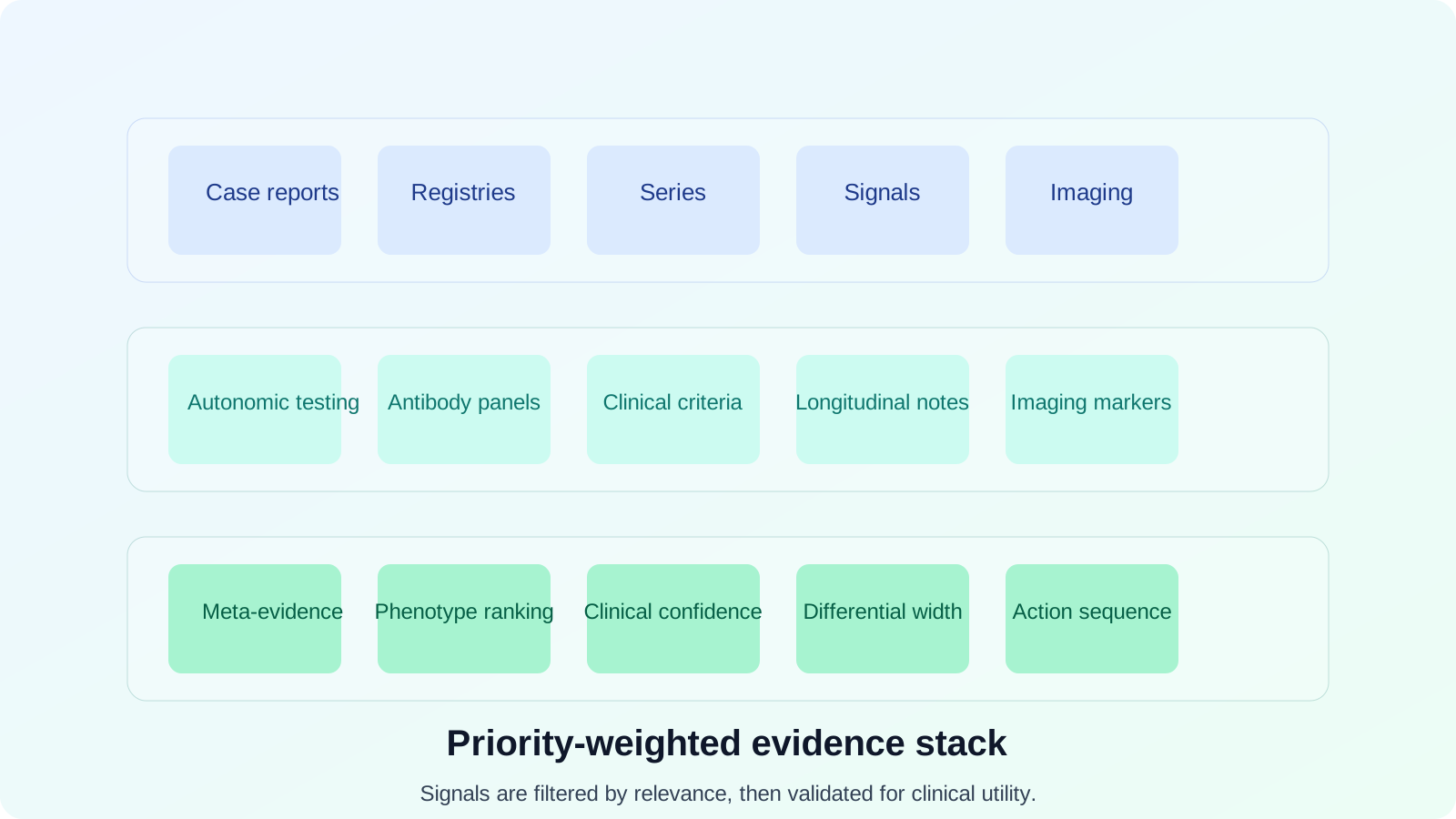
Evidence stack by provenance
How case reports and case-series evidence are ranked by quality, relevance, and phenotype overlap.
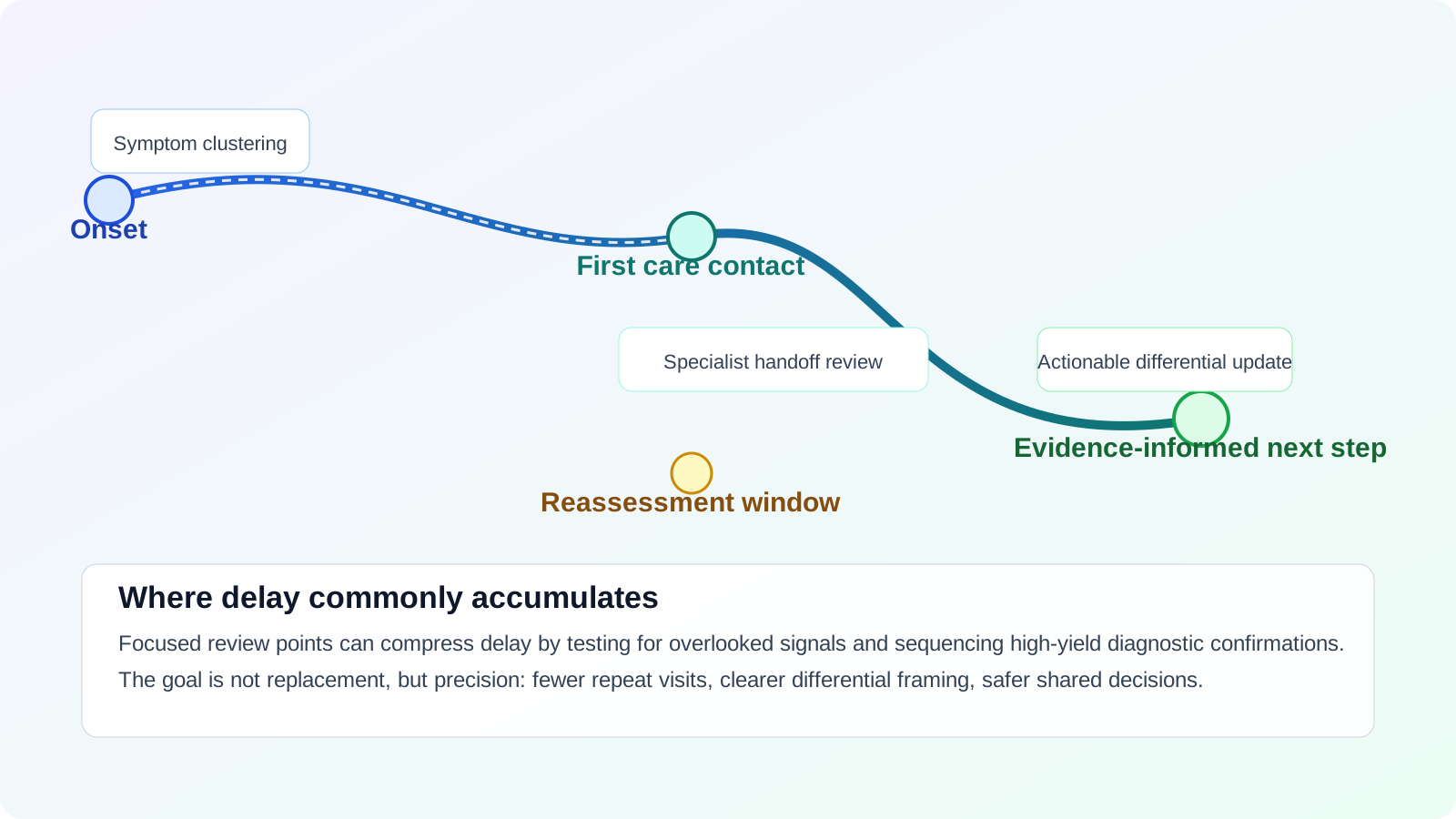
Diagnostic trajectory timeline
Where delayed recognition commonly occurs and where targeted reassessment can most change next steps.
Evidence-Based Literature Reviews
For patients labeled with medically unexplained, functional, or psychosomatic symptoms who wonder whether a specific diagnosis was missed, this review service provides a structured second-opinion process at the evidence level.
The epidemiology is clear: medically unexplained symptoms are common in care settings. Across seven specialty out-patient settings, 52% of new patients met criteria for medically unexplained symptoms (Nimnuan et al., 2001) PMID 11448704 / doi:10.1016/S0022-3999(01)00223-9. In primary care, Haller and colleagues estimated 26.2–34.8% met DSM/ICD somatoform criteria and 40.2–49% reported at least one unexplained symptom (PMID 25939319) with PubMed and doi:10.3238/arztebl.2015.0279.
At the same time, modern neurology follow-up work still matters as a guardrail: in a prospective cohort, only 0.4% of initially unexplained out-patient neurologic presentations later converted to a new unexpected organic diagnosis PMID 19737842 / doi:10.1093/brain/awp220. That is why this is built as a targeted support service—not a blanket substitute for clinical diagnosis.
What it is
Evidence-based literature review conducts a personalized literature workup around one patient story. A patient (or family) submits a structured timeline, prior workup, key symptoms, response to prior treatment, and available records. Our process then runs a deep evidence sweep across case reports, case series, registry literature, and adjacent specialty papers the current care team may not regularly review.
This design is grounded in two evidence streams. First, rare and atypical presentations are often first recognized in case reports and small series PMID 11182844 / doi:10.7326/0003-4819-134-4-200102200-00017. Second, structured AI-assisted differential generation can meaningfully improve diagnostic exploration on complex presentations PMID 37318797 / doi:10.1001/jama.2023.8288, PMID 38557971 / doi:10.1001/jamainternmed.2024.0295, and PMID 39466245 / doi:10.1001/jamanetworkopen.2024.40969.
In practice this resembles modern rare-disease retrieval workflows such as FindZebra’s case report search approach PMID 37384616 / doi:10.1371/journal.pdig.0000269.
What the patient receives
Each engagement produces a ranked, evidence-grounded dossier of published cases and case clusters that overlap with the submitted presentation.
Each entry includes:
- The final diagnosis reported in the source literature.
- The diagnostic path that improved recognition (symptom pattern, referral trajectory, key tests, specialist sequence).
- The objective outputs (imaging, autonomic testing, antibody studies, pathology, or longitudinal clinical criteria where applicable).
- A concise “how this compares to your trajectory” section for discussion with the treating clinician.
This format is intended to shift the conversation from “this is unexplained” to “which of these documented clinical patterns is sufficiently likely to be actively ruled in or ruled out next.”
Historical analogs remain powerful reasons this is worthwhile: POTS cohorts report long delays and repeated misattribution, including diagnostic delays (median 24 months in a J Intern Med sample) PMID 30861229 / doi:10.1111/joim.12895, large community cohorts reporting ~76% with prior misdiagnosis and median multi-physician delay PMID 34993433 / doi:10.1016/j.cjco.2021.08.014, and pediatric-onset POTS cohorts noting frequent “in your head” framing PMID 38958137 / doi:10.1161/JAHA.123.033485.
Anti-NMDAR encephalitis is another historical example of early psychiatric-pattern misattribution prior to systematic antibody testing becoming standard PMID 18851928 / doi:10.1016/S1474-4422(08)70224-2.
What it is not
Evidence-based reviews are not a diagnostic service, not medical advice, and not a replacement for treating clinicians. It is literature synthesis intended to inform clinician-facing discussion.
The clinical literature also cautions that conversion-style or unexplained diagnoses are not always wrong. Older misdiagnosis work suggests a non-zero rate (roughly 4% in modern conversion-symptom meta-analysis studies) PMID 16223792 / doi:10.1136/bmj.38628.466898.55, which means the right response is rigorous curiosity and structured follow-up, not contempt.
Why we built it
This approach is designed for patients and families who feel they have repeatedly exhausted routine pathways and need an organized, evidence-backed literature view before the next decision point. One current exemplar is multiple system atrophy (MSA): clinically, MSA has repeatedly been misclassified as Parkinsonism variants and other disorders because early signs overlap broadly with degenerative and nondegenerative syndromes.
The 2022 MDS criteria were updated to improve early recognition and introduced a prodromal category PMID 35445419 / doi:10.1002/mds.29005. Yet real-world registries still show delayed recognition at first specialist visit, with far fewer patients meeting stricter clinical definitions early on PMID 38494718 / doi:10.2169/internalmedicine.3275-23. Earlier reviews also describe frequent diagnostic delay and misdiagnosis in routine practice and show how autonomic testing and imaging can materially improve confidence PMID 33043073 / doi:10.1002/mdc3.13052, while differential guidance emphasizes the practical burden of overlap PMID 36057832 / doi:10.3233/JPD-223392.
Physician and researcher coaching
For physicians and researchers, 1:1 mentorship sessions will be available for a select group of trainees to build and run evidence syntheses with agentic AI workflows, with our founder, Dr. Ahmed Abuzaid’s guidance. Dr. Abuzaid is a renowned researcher with over 100 peer-indexed publications and serves as Director of Research and Innovations at Alfaisal University. He will also offer small-group projects that he personally oversees toward publication.
Framing caveat (public policy trigger)
We will explicitly revise this framing if any of these occur:
- A head-to-head randomized study shows no benefit for literature-driven second-opinion support versus usual care.
- Modern misdiagnosis-rate estimates for functional labels fall meaningfully below 4% in robust prospective cohorts.
- A regulator classifies services like this as a regulated medical device.
Sources for the above claims (PMID-verified)
- 11448704 / 10.1016/S0022-3999(01)00223-9
- 25939319 / 10.3238/arztebl.2015.0279
- 19737842 / 10.1093/brain/awp220
- 16223792 / 10.1136/bmj.38628.466898.55
- 18851928 / 10.1016/S1474-4422(08)70224-2
- 30861229 / 10.1111/joim.12895
- 34993433 / 10.1016/j.cjco.2021.08.014
- 38958137 / 10.1161/JAHA.123.033485
- 11182844 / 10.7326/0003-4819-134-4-200102200-00017
- 37384616 / 10.1371/journal.pdig.0000269
- 37318797 / 10.1001/jama.2023.8288
- 38557971 / 10.1001/jamainternmed.2024.0295
- 39466245 / 10.1001/jamanetworkopen.2024.40969
- 33043073 / 10.1002/mdc3.13052
- 36057832 / 10.3233/JPD-223392
- 35445419 / 10.1002/mds.29005
- 38494718 / 10.2169/internalmedicine.3275-23
Clinicians remain at the decision boundary. SOA Healthcare does not build or promote autonomous clinical decision-making.